
JS-SEZ: Investment Incentives Tied To Job Opportunities, Local Vendors
ISKANDAR PUTERI, Nov 26 (Bernama) -- The Johor government wants to ensure that investments under the Johor-Singapore Special Economic Zone (JS-SEZ) generate direct economic benefits for the local population, including through the provision of quality jobs and opportunities for micro, small and medium enterprises (MSMEs) to participate in investors' supply chains.
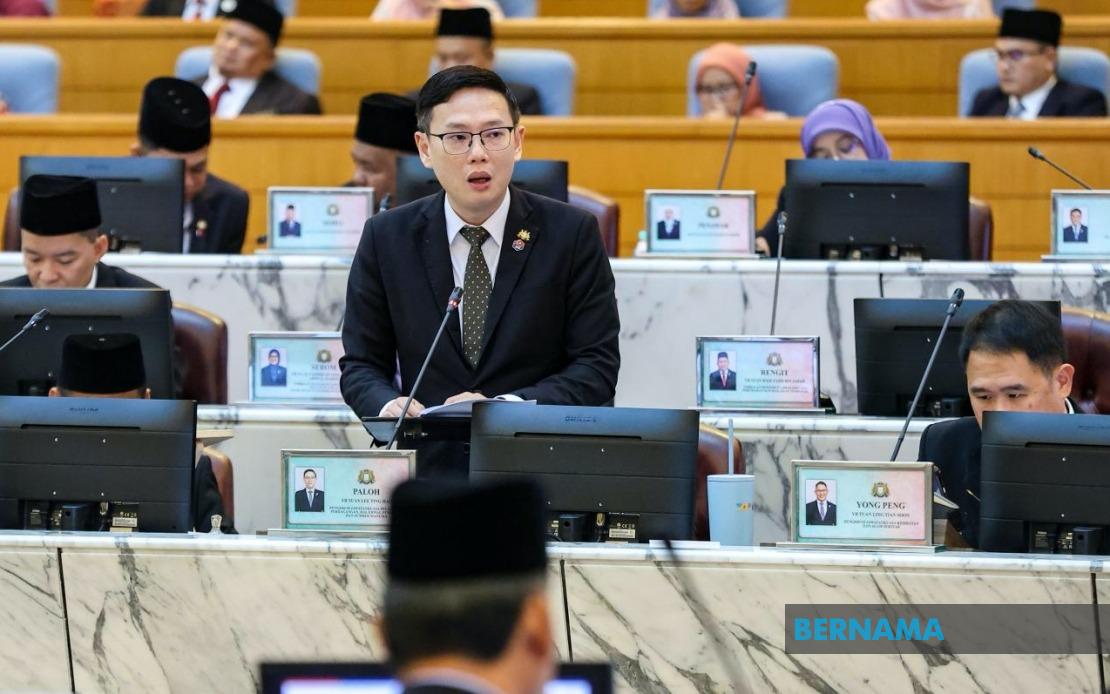
State Investment, Trade, Consumer Affairs and Human Resources Committee chairman Lee Ting Han said the state government welcomed a proposal requiring companies receiving incentives under the JS-SEZ to employ at least 70 per cent local workers and provide opportunities to vendors among the bottom 40 per cent income earners (B40) and middle 40 per cent income earners (M40) in Johor.
He said the aspiration was also reflected in the implementation of the New Investment Incentive Framework (NIF) at the federal level, which came into effect on March 1 under the supervision of the Malaysian Investment Development Authority.
He said the NIF adopts an outcome-based approach, unlike the previous method which provided tax incentives in bulk based solely on capital value.
Through this approach, companies that apply for and receive government incentive packages must meet performance criteria based on an evaluation scorecard, including the creation of high-value jobs for locals, offering premium salaries, and reducing reliance on low-skilled foreign workers.
"The assessment also takes into account the strengthening of the domestic supply chain through the use of local inputs and services as well as vendor development, in addition to the investors' commitment to research and development, technology transfer, and local talent development.
"Although the establishment of mandatory quotas such as 70 per cent local workers is subject to federal labour policies and legislation, this NIF approach acts as an effective reciprocal instrument.
"The higher the benefits provided by investors to local workers and vendors, the higher the level of incentives they are entitled to receive," he said during the winding-up session at the Johor State Assembly (DUN) sitting at the Sultan Ismail Building here today.
Meanwhile, Johor is targeting economic growth of 8.2 per cent this year and 7.2 per cent in 2027, after recording growth of eight per cent in 2025, the highest among the states for the second consecutive year.
Lee said the state also recorded RM99.71 billion in approved investments between January and September 2026, an increase of 9.3 per cent compared to RM91.19 billion in the same period last year.
He said the total includes 674 projects expected to create 22,349 new job opportunities, with the services sector contributing RM68.26 billion, while the manufacturing sector recorded RM31.22 billion.
"The information and communication subsector leads the services sector with an investment value of RM61.60 billion, while the electrical and electronics subsector is the main contributor to the manufacturing sector with RM16.45 billion.
"The priority of the state government now is to expedite the implementation of high-impact ongoing projects to create more quality job opportunities and increase the people's income," he said.
In an effort to strengthen the participation of local MSMEs in the economic chain, Lee said the Johor Budget 2027 provides an additional RM100 million in interest-free financing through the Johor Entrepreneur Micro Financing Scheme in collaboration with financial institutions.
In addition, the state government has allocated RM2.5 million for the Johor Entrepreneur Advancement Assistance and RM2.5 million for the Meh Sapot Lokal Product Development Programme to help entrepreneurs enhance product capabilities and expand markets.
“An allocation of RM1 million has also been set aside for the Didik Usahawan Bangsa Johor Programme, while the Women’s Economic Empowerment Programme (PINJAR) and SMART PEMULA have received a combined allocation of RM3 million.
“The state government has also allocated RM1 million for first-year business licence fee exemptions for hawkers and small traders,” he said.
Lee added that an interim study by the Johor State Economic Planning Division (BPEN) and Universiti Malaya found that SMEs face challenges in accessing buyers, enhancing business capabilities, and bearing the costs of compliance with standards.
-- BERNAMA