
HDC Targets RM70 Bln In Halal Exports By 2027 -- CEO
By Nurul Hanis Izmir
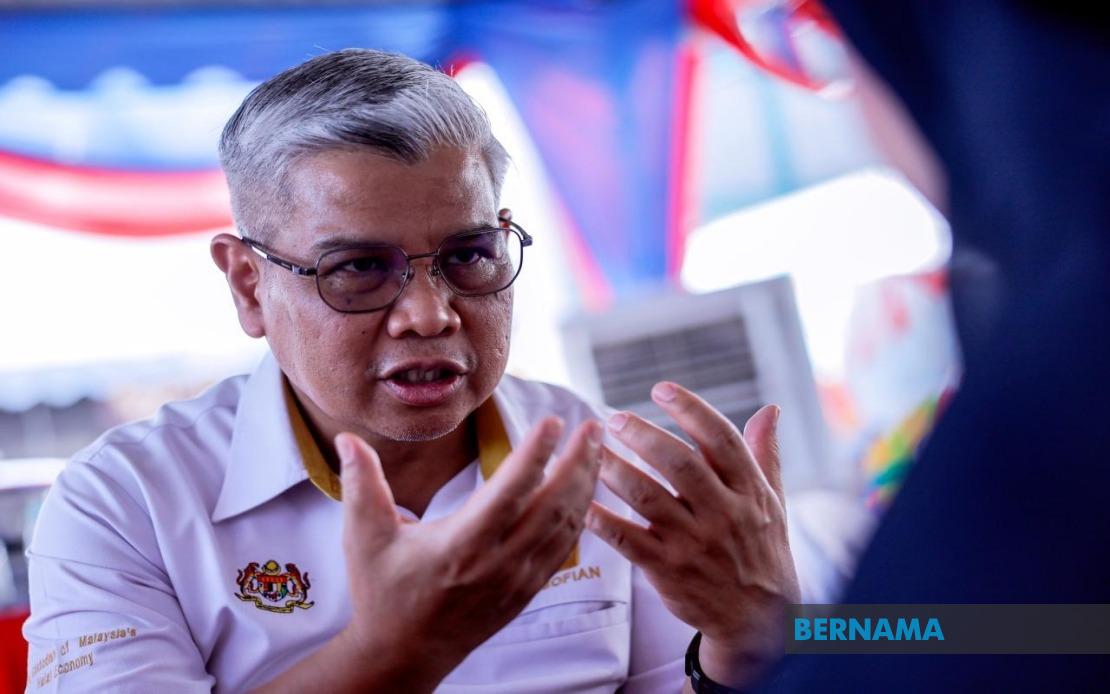
PUTRAJAYA, Nov 26 (Bernama) -- The Halal Development Corporation Bhd (HDC) is targeting RM70 billion in halal exports by 2027, up from the RM69 billion target for this year, with halal diplomacy set to play a bigger role in opening new markets and securing technology, investment and strategic partnerships for Malaysian industry players.
Its chief executive officer, Hanisofian Alias, said Malaysia needed to leverage halal diplomacy to secure concrete economic benefits as it sought to further expand halal exports beyond the RM68.52 billion recorded last year.
He said the country is also targeting more than RM80 billion in halal exports by 2030, making it important for international cooperation in the halal sector to move beyond knowledge-sharing and generate tangible benefits for the country.
He noted that Malaysia’s halal exports had grown substantially from about RM8 billion in 2006, when HDC was established under the Ninth Malaysia Plan, to RM68.52 billion last year. The establishment of the agency also marked a shift in the perception of halal from being viewed primarily as a matter of religious compliance to a driver of economic growth.
“But now, Malaysia is no longer the only country developing its halal industry. Other countries are also stepping up efforts to grow their halal sectors, with some appearing to move faster than us. South Korea and Japan, for instance, are making significant strides.
“And many countries are approaching the Prime Minister Datuk Seri Anwar Ibrahim to pursue halal cooperation. We hear about cooperation here and there, but what exactly do we want to work on?” he told Bernama on the sidelines of the Round Table Discussion: 10th Anniversary of the Establishment of the Tun Abdullah Ahmad Badawi Legacy Organisation.
HDC to review halal diplomacy framework
Hanisofian said HDC is reviewing its halal diplomacy framework to ensure that international cooperation delivers tangible benefits for Malaysia, particularly in terms of market access, technology, investment and expertise.
The newly appointed CEO also said that the approach should be guided by a win-win situation, with each country leveraging its respective strengths to complement Malaysia’s capabilities.
“A country may gain knowledge from us, but we may gain technology, access to markets and so on,” he pointed out.
He cited potential cooperation with Singapore as an example, whereby the republic’s expertise in industrial park development could be combined with Malaysia’s strength in halal certification to jointly explore opportunities in other markets.
“By leveraging these complementary values, we are working towards having Singapore bring its expertise in industrial parks, while Malaysia provides its halal certification capabilities, enabling both countries to work together to penetrate other markets.
“So, that is the diplomatic model...but it cannot be applied to every country. Each country requires a different approach,” he emphasised.
Hanisofian said the approach was important as more countries were showing interest in developing their respective halal industries, creating stronger competition for Malaysia.
He said Malaysia should remain open to international cooperation while ensuring that the interests and competitiveness of the domestic halal industry were protected.
“Otherwise, people will come to learn from us, but we gain nothing. So, this is very important...it is not about stopping cooperation, but we have to start protecting our own industry as well,” he said.
He added that strategically structured international cooperation could help Malaysia gain access to new markets while enabling local industry players to obtain the technology and expertise needed to expand.
Strengthening the ecosystem
Hanisofian said HDC’s next phase of development would also focus on strengthening the halal ecosystem through digitalisation, supply chain development, research and development (R&D), sustainability and economic diplomacy.
This includes the development of an integrated halal platform using technologies such as artificial intelligence (AI), blockchain, traceability and data analytics, as well as greater integration between agencies involved in guidance and enforcement.
HDC is also looking to strengthen the halal supply chain and R&D capabilities, including the development and commercialisation of specialised halal ingredients, while supporting homegrown halal champions.
The halal and environmental, social and governance principles could also be brought closer together, with halal serving as an added value for products that are clean, safe, ethical and environmentally-friendly.
Hanisofian said these efforts would help Malaysia move beyond its traditional strengths in halal certification to strengthen its position across the supply chain while driving digital innovation and sustainable growth.
Malaysia’s halal exports currently comprise mainly food and beverages, which account for 54 per cent, followed by ingredients at 31 per cent, palm oil derivatives (7.0 per cent), cosmetics (5.0 per cent), pharmaceuticals (2.0 per cent), and industrial chemicals (1.0 per cent).
Hanisofian said Malaysia’s halal diplomacy should ultimately strengthen the country’s position as a global halal hub and centre of gravity within ASEAN, the Organisation of Islamic Cooperation (OIC) and the wider global market.
During his tenure as the country’s fifth Prime Minister from 2003 to 2009, the late Tun Abdullah played a key role in positioning halal as a strategic economic sector.
His administration promoted Malaysia as a global halal hub, with initiatives including the Malaysia International Halal Showcase and initiatives to strengthen halal standards, certification, industry development and international market access.
One of his key legacies was the establishment of the Halal Industry Development Corporation (HDC) in 2006, aimed at coordinating and driving the development of Malaysia’s halal industry beyond certification to include investment, branding, human capital, Halal Parks and global trade.
The late former premier’s vision was to leverage Malaysia’s halal expertise and credibility to capture opportunities in the growing global halal market.
-- BERNAMA